

Personal Finance in Canada: Your Complete Guide to Financial Success
This Page's Content Was Last Updated: December 11, 2025
- Foundation: Build a personalized budget that covers your essential needs first, allows room for wants, and prioritizes savings or debt repayment (aim for at least 20% if possible). Tools like the 50/30/20 rule can be a helpful starting point.
- Safety Net: Build an accessible emergency fund covering three to six months of expenses, ideally held in a High-Interest Savings Account (HISA).
- Wealth Building: Maximize Canadian tax-advantaged accounts like the TFSA, RRSP, and the new FHSA to grow your wealth efficiently.
- Debt & Credit: Manage debt strategically by prioritizing high-interest debt repayment, and maintain a strong credit score (above 660) by paying bills on time and keeping credit utilization low.
- Security: Ensure long-term financial security by both investing (diversifying to grow wealth) and having adequate insurance (life, disability, home) to protect your assets and family from catastrophe.

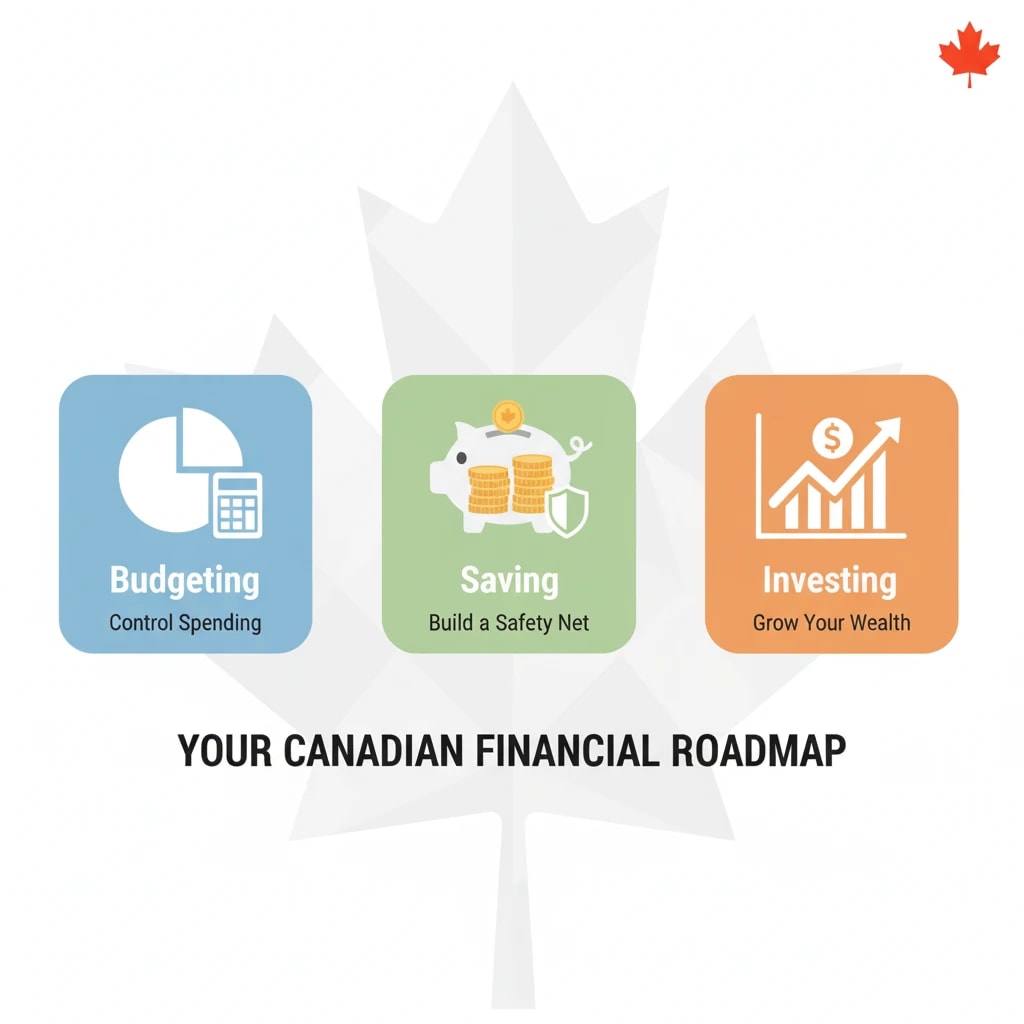
Take control of your money right now. Whether you're a student, a new homeowner, or nearing retirement, this guide is your roadmap to financial confidence in Canada. Managing your money effectively is one of the most important skills you can develop. Whether you're just starting your financial journey or looking to optimize your existing strategy, understanding personal finance fundamentals will help you build wealth, achieve your goals, and secure your financial future.
At WOWA.ca, we provide Canadians with the tools, calculators, and information needed to make informed financial decisions. This guide covers everything from budgeting basics to advanced investment strategies, tailored specifically for the Canadian financial landscape.
What is Personal Finance?
Personal finance encompasses all aspects of managing your money, including earning, spending, saving, investing, and protecting your wealth. It involves making strategic decisions about your income and expenses to achieve both short-term needs and long-term goals.
Key areas of personal finance include:
- Budgeting – Tracking income and expenses to control your spending
- Saving – Setting aside money for emergencies and future goals
- Investing – Growing your wealth through various investment vehicles
- Debt Management – Understanding and strategically managing loans and credit
- Credit Building – Establishing and maintaining a strong credit profile
- Tax Planning – Optimizing your tax situation to keep more of what you earn
- Insurance – Protecting yourself and your assets from financial risks
- Retirement Planning – Preparing financially for your post-work years
Budgeting: The Foundation of Financial Success
A budget is your financial roadmap. It helps you understand where your money goes and empowers you to make intentional spending decisions aligned with your values and goals.
Creating Your Budget
Start by calculating your monthly after-tax income, then categorize your expenses into fixed costs (rent, insurance, loan payments) and variable costs (groceries, entertainment, dining out). The 50/30/20 rule is a popular framework: allocate 50% of your income to needs, 30% to wants, and 20% to savings and debt repayment.
Track your spending for at least a month to understand your actual habits. Many Canadians are surprised to discover how much they spend on subscriptions, dining out, or impulse purchases. Once you have this baseline, you can identify areas to optimize.
Budgeting Tools and Resources
WOWA.ca offers a budgeting calculator to help you budget effectively and understand your financial situation. Use our tools to calculate your take-home pay, understand the impact of different financial decisions, and plan for major expenses.
Saving Money: Building Your Financial Foundation
Savings provide security and freedom. They protect you during emergencies, enable you to pursue opportunities, and give you peace of mind knowing you have a financial cushion.
Emergency Funds
Financial experts recommend maintaining an emergency fund covering three to six months of essential expenses. This fund protects you from unexpected costs like car repairs, medical emergencies, or job loss. Keep your emergency fund in a high-interest savings account where it's accessible but separate from your daily spending.
High-Interest Savings Accounts
Canadian banks and financial institutions offer various savings account options. High-interest savings accounts (HISAs) provide better returns than traditional savings accounts while maintaining liquidity and safety. Tax-Free Savings Accounts (TFSAs) allow your savings to grow tax-free, making them ideal for both short-term and long-term goals.
Compare current savings account rates and features on WOWA.ca to find the best option for your needs. Consider factors like interest rates, fees, minimum balances, and accessibility.
Savings Strategies
Automate your savings by setting up automatic transfers on payday. This "pay yourself first" approach ensures you prioritize saving before spending on discretionary items. Even small amounts add up significantly over time thanks to compound interest.
Set specific savings goals with target amounts and deadlines. Whether you're saving for a down payment, vacation, or your child's education, having concrete goals makes it easier to stay motivated and track progress. Use WOWA’s savings calculator to assess the growth of your savings over time.



Trading Fees
- Low Commissions
- In-Depth Research
- Wide Variety of Investment Choices


Investing: Growing Your Wealth
While saving preserves your money, investing helps it grow. Understanding investment basics enables you to build wealth over time and achieve long-term financial goals like retirement.
Investment Accounts in Canada
Canada offers several tax-advantaged investment accounts:
Tax-Free Savings Account (TFSA) - Contributions aren't tax-deductible, but investment growth and withdrawals are tax-free. TFSAs offer flexibility for various goals and time horizons. It is very important to pay attention to your TFSA contribution room and avoid the over-contribution penalty.
Registered Retirement Savings Plan (RRSP) - Contributions are tax-deductible, reducing your current taxable income. Investments grow tax-deferred until withdrawal in retirement, ideally when you're in a lower tax bracket.
First Home Savings Account (FHSA) - Combines the benefits of TFSAs and RRSPs specifically for first-time homebuyers. Contributions are tax-deductible, and withdrawals for home purchases are tax-free.
Registered Education Savings Plan (RESP) - Helps save for a child's post-secondary education with government grants matching a portion of contributions.
Investment Options
Diversification is crucial for managing risk. Common investment vehicles include:
Stocks - Ownership shares in companies offering growth potential but with higher volatility.
Bonds - Fixed-income securities providing stable, predictable returns with lower risk than stocks.
Mutual Funds - Professionally managed portfolios pooling money from multiple investors.
Exchange-Traded Funds (ETFs) - Similar to mutual funds but traded like stocks, typically with lower fees.
GICs (Guaranteed Investment Certificates) - Low-risk investments guaranteeing your principal with modest returns.
Real Estate - Property investments through direct ownership or Real Estate Investment Trusts (REITs).
Your investment mix should reflect your age, risk tolerance, time horizon, and financial goals. Younger investors generally can accept more risk for higher potential returns, while those nearing retirement should prioritize capital preservation.


Managing Debt Effectively
Not all debt is bad, but managing it strategically is crucial for financial health. Understanding different types of debt helps you prioritize repayment and avoid costly mistakes.
Types of Debt
Good Debt - Investments in your future that build wealth, like mortgages, student loans, or business loans with reasonable interest rates.
Bad Debt - High-interest consumer debt for depreciating assets or discretionary spending, particularly credit card debt with rates often exceeding 20%.
Debt Repayment Strategies
The avalanche method focuses on paying off the highest-interest debt first, minimizing the total interest paid. The snowball method tackles the smallest balances first, providing psychological wins that maintain motivation.
Consider debt consolidation if you have multiple high-interest debts. Combining them into a single lower-interest loan can reduce your monthly payments and total interest costs.
Mortgages
For most Canadians, a mortgage is their largest debt. Understanding mortgage types, mortgage terms, and mortgage rates significantly impacts your long-term financial picture. Fixed-rate mortgages provide payment stability, while variable-rate mortgages may offer lower rates with some risk.
WOWA.ca provides comprehensive mortgage resources, including current rates from major lenders, mortgage calculators, and guides on the home-buying process. Compare mortgage options and understand how different factors affect your payments and total interest costs.
Building and Maintaining Good Credit
Your credit score affects your ability to borrow money and the interest rates you'll pay. Building strong credit opens doors to better financial products and can save you thousands of dollars over your lifetime.
Understanding Credit Scores
Credit scores in Canada range from 300 to 900. Most lenders consider scores above 660 as good credit score, with excellent credit typically starting around 750. Your score is based on payment history, credit utilization, credit history length, types of credit, and recent inquiries.
Improving Your Credit
Pay all bills on time, as payment history is the most significant factor affecting your score. Keep credit utilization below 30% of your available credit limits. Maintain older credit accounts to lengthen your credit history. Avoid applying for multiple credit products in short periods, as each application creates a hard inquiry.
Review your credit reports from Equifax and TransUnion regularly to ensure accuracy and catch potential fraud. Canadian residents are entitled to free credit reports from each bureau annually.
Tax Planning for Canadians


Understanding Canada's tax system helps you keep more of your hard-earned money. Strategic tax planning throughout the year, not just at tax time, can significantly reduce your tax burden.
Tax Deductions and Credits
Maximize RRSP contributions to reduce taxable income. Claim eligible deductions like childcare expenses, moving expenses, employment expenses, and student loan interest. Take advantage of tax credits, including the Canada Child Benefit, GST/HST credit, disability tax credit, and medical expense credit.
Tax-Advantaged Accounts
Use your TFSA, RRSP, and FHSA contribution room strategically. Consider which account makes sense for different goals based on your current and expected future tax situations. Higher earners often benefit more from RRSP contributions due to immediate tax savings, while TFSAs may be better for those in lower tax brackets or needing flexibility.
Income Splitting
Couples can reduce their combined tax burden through income splitting strategies like spousal RRSP contributions, pension income splitting, and splitting Canada Pension Plan (CPP) benefits in retirement.
WOWA.ca offers tax calculators, helping you estimate your tax liability and understand how different financial decisions impact your tax situation.
Insurance: Protecting What Matters
Insurance protects you and your family from financial catastrophe. While it requires ongoing premiums, the right coverage provides invaluable peace of mind and financial security.
Types of Insurance
Life Insurance - Provides financial support to dependents if you pass away. Term life insurance offers coverage for specific periods at lower premiums, while permanent life insurance builds cash value but costs more.
Disability Insurance - Replaces income if you become unable to work due to illness or injury. Many Canadians underestimate this need despite disability being more likely than death during working years.
Health and Dental Insurance - Supplements provincial health coverage for prescriptions, dental care, vision care, and other medical services not covered by government plans.
Home Insurance - Protects your property and belongings from damage, theft, and liability. Required by mortgage lenders and essential for protecting your largest asset.
Auto Insurance - Mandatory in Canada, covering liability and, optionally, collision, comprehensive, and other protections.
Critical Illness Insurance
Critical illness insurance provides a lump sum payment upon diagnosis of serious conditions like cancer, heart attack, or stroke. This money can cover treatment costs, allow time off work, or pay for lifestyle modifications without depleting savings.
Retirement Planning: Securing Your Future
Retirement may seem distant, but starting early dramatically impacts your financial security in later years. Thanks to compound interest, time is your most valuable asset in retirement planning.
Government Benefits
All Canadians are entitled to certain retirement benefits:
Canada Pension Plan (CPP) or Quebec Pension Plan (QPP) - Based on your contributions during working years, with benefits beginning as early as age 60 or as late as age 70. Delaying increases your monthly benefit.
Old Age Security (OAS) - Available to most Canadians age 65 and older, regardless of work history, with additional Guaranteed Income Supplement (GIS) for low-income seniors.
Retirement Savings Strategies
Start contributing to your RRSP early and consistently. Maximize employer matching in workplace pension plans, as this is essentially free money. Consider your expected retirement lifestyle when calculating how much you need to save.
The rule of thumb suggests needing 70-80% of your pre-retirement income annually in retirement, though your actual needs depend on your lifestyle, health, and plans. Use our retirement calculator to estimate your needs and track whether you're on target.
Pension Plans
Many employers offer defined benefit or defined contribution pension plans. Understand your plan's features, vesting requirements, and how it integrates with your personal savings strategy. If you change employers, understand your options for transferring or managing existing pension credits.
Financial Goal Setting
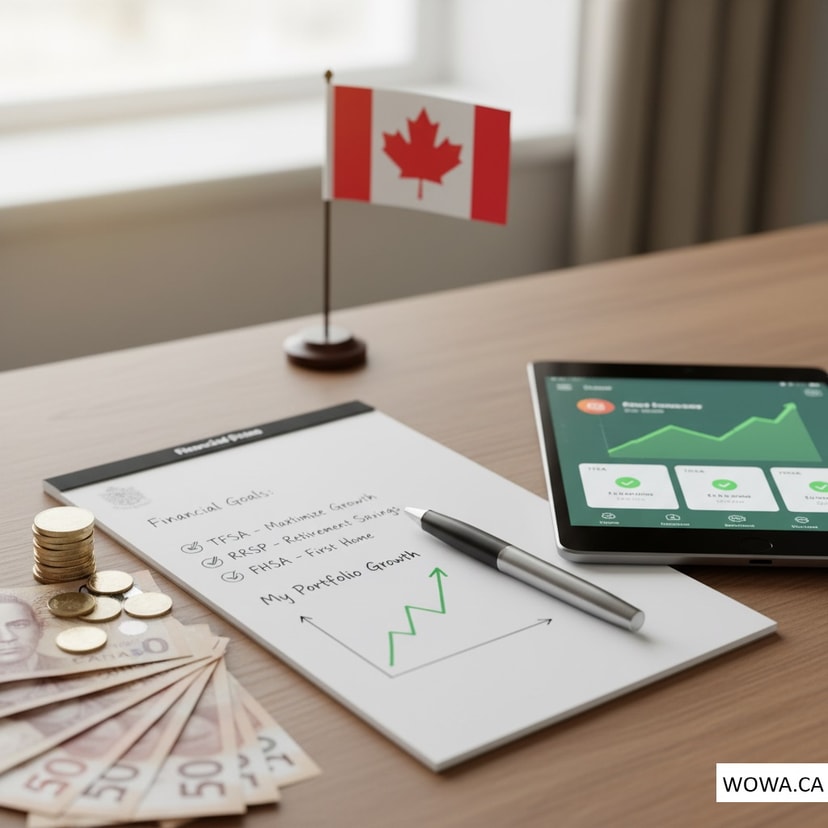
Effective personal finance requires clear goals. Without knowing what you're working toward, it's difficult to stay motivated and make appropriate financial decisions.
SMART Financial Goals
Make goals Specific, Measurable, Achievable, Relevant, and Time-bound. Instead of "save more money," aim for "save $20,000 for a down payment in 20 months by setting aside $1,000 monthly."
Short-Term vs. Long-Term Goals
Balance immediate needs and desires with future security. Short-term goals (under one year) might include building an emergency fund or paying off credit card debt. Medium-term goals (1-5 years) could involve saving for a car or a wedding. Long-term goals (5+ years) typically include buying a home, funding education, or retirement planning.
Prioritize goals based on urgency, importance, and feasibility. Some goals, like establishing an emergency fund, should generally take precedence over discretionary purchases.
Financial Literacy and Education
Your greatest asset in personal finance is knowledge. Understanding financial concepts, products, and strategies enables you to make informed decisions and avoid costly mistakes.
Continuous Learning
Stay informed about changes to tax laws, interest rates, and financial products. Follow reputable financial news sources and consider working with financial professionals for complex situations.
WOWA.ca regularly publishes educational content, guides, and updates on Canadian personal finance topics. Our resources help you understand everything from mortgage mechanics to investment strategies.
When to Seek Professional Advice
While many financial decisions can be handled independently, complex situations may benefit from professional guidance. Consider consulting with a fee-only financial planner for comprehensive financial planning, an accountant for tax optimization strategies, or a mortgage broker when purchasing property.
Taking Control of Your Financial Future
Personal finance isn't about perfection; it's about progress. Small, consistent actions compound over time into significant results. Start where you are, make incremental improvements, and stay focused on your goals.
The Canadian financial landscape offers numerous opportunities and tools to build wealth and achieve financial security. By understanding the fundamentals covered in this guide and taking advantage of resources like those available on WOWA.ca, you can make informed decisions that support your financial well-being.
Your financial journey is unique. What works for someone else may not fit your situation, goals, or values. Use the information and tools available on WOWA.ca to craft a personal finance strategy that works for you, then commit to consistent execution and periodic review.
Explore More Personal Finance Resources on WOWA.ca
WOWA.ca offers comprehensive tools and information to support every aspect of your financial journey:
Mortgages and Home Buying
- Current mortgage rates from Canadian lenders
- Mortgage payment calculator
- Home affordability calculator
- First-time home buyer guides
- Mortgage renewal strategies
Banking and Savings
- High-interest savings account comparison
- TFSA contribution room and rules
- Bank account comparison tools
- GIC rates and GIC calculators
Credit Cards and Credit
- Credit card comparisons and offers
- Credit score guides and credit score improvement strategies
Investing
- RRSP contribution limits and rules
- FHSA information for first-time buyers
- Investment account comparisons
- RESP guide and RESP calculator for education savings
Taxes
Insurance
Calculators and Tools
Visit WOWA.ca to access these resources and take the next step in your financial journey. Whether you're comparing mortgage rates, calculating your savings goals, or planning for retirement, we provide the information and tools you need to make confident financial decisions.
Disclaimer:
- Any analysis or commentary reflects the opinions of WOWA.ca analysts and should not be considered financial advice. Please consult a licensed professional before making any decisions.
- The calculators and content on this page are for general information only. WOWA® does not guarantee the accuracy and is not responsible for any consequences of using the calculator.
- Financial institutions and brokerages may compensate us for connecting customers to them through payments for advertisements, clicks, and leads.
- Interest rates are sourced from financial institutions' websites or provided to us directly. Real estate data is sourced from the Canadian Real Estate Association (CREA) and regional boards' websites and documents.