

A Guide to Real Estate Lawyers in Canada


What You Should Know
- A real estate lawyer or other qualified legal professional is typically required to complete a home purchase or sale, including registering the property transfer
- Legal fees are usually charged as a flat fee and often range from about $800 to $2,500+, depending on the transaction and location
- In addition to legal fees, you’ll need to cover disbursements, such as title insurance, land transfer tax, and registration fees
What Does a Real Estate Lawyer do?
A real estate lawyer (also called a real estate attorney) handles the legal aspects of a real estate transaction, from reviewing documents to completing the closing process. In most cases, buyers and sellers each have their own lawyer representing their interests.
For buyers, the lawyer often also represents the mortgage lender and ensures that the lender’s requirements are met before funds are released. While many responsibilities overlap, the roles of a lawyer can differ depending on whether they are acting for the buyer or the seller.
Real Estate Lawyers: Buyer vs. Seller Responsibilities
| Real Estate Lawyers for Buyers | Real Estate Lawyers for Sellers |
|---|---|
| Review the purchase agreement and related documents | Review the sale agreement and related documents |
| Arrange title insurance (often required by the lender) | Obtain mortgage payout statements (if applicable) |
| Conduct title searches and identify liens or issues | Arrange for mortgage discharge and resolve title issues |
| Represent both the buyer and, in most cases, the mortgage lender | Ensure existing mortgages are paid off from the sale proceeds |
| Receive funds from the lender and manage closing funds | Prepare closing documents and finalize adjustments |
| Register the transfer of ownership and mortgage | Facilitate closing and transfer of ownership |
| Facilitate closing and ensure legal completion of the purchase | Facilitate closing and ensure legal completion of the sale |
Role of a Real Estate Lawyer for Buyers:

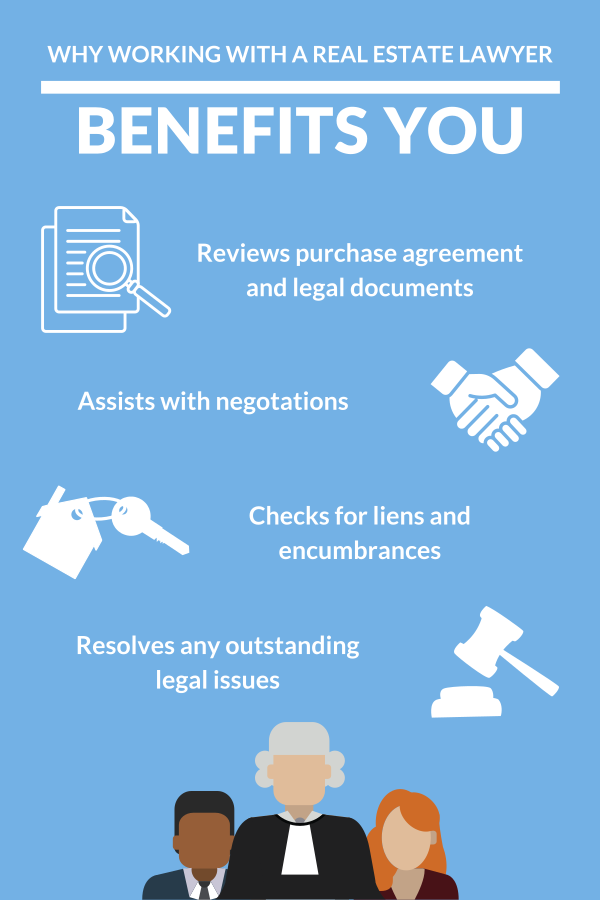
Real estate lawyers play an important role in protecting buyers and ensuring that a home purchase is completed correctly. They help confirm that the property you are buying matches what was agreed to, identify potential legal issues, and handle the legal steps required to complete the transaction.
The purchase agreement—called an agreement of purchase and sale in Ontario or a contract of purchase and sale in British Columbia—sets out the key terms of the deal, including the purchase price, closing date, conditions, and details about the property.
In most cases, the buyer’s real estate agent prepares the initial offer using a standard template and submits it to the seller’s agent. A buyer’s real estate lawyer then reviews the agreement to identify potential issues or unclear terms and may recommend changes before the agreement becomes firm.
The purchase agreement is the primary legally binding document governing the transaction. It defines what is included in the sale and the obligations of each party. While marketing materials—such as MLS listings—can provide helpful information, the final agreement is what determines what you are legally purchasing. Similarly, any promises or incentives should be clearly documented in the agreement to be enforceable.
Title insurance protects buyers against certain risks related to ownership of the property, such as title defects, fraud, or undisclosed liens. Although it is not required by law, many mortgage lenders require buyers to obtain title insurance as a condition of financing.
In most cases, your real estate lawyer will arrange title insurance on your behalf as part of the closing process and explain the coverage options available. Buyers can also obtain title insurance through insurers or brokers, although some providers work primarily with legal professionals.
Before closing, your lawyer will conduct a title search to confirm that the seller has the legal right to transfer ownership of the property. This includes checking for existing liens, such as mortgages or other registered claims, as well as reviewing any encumbrances on title (e.g., easements or restrictive covenants) that may affect how you can use the property.
Your lawyer may also review other relevant documents, such as surveys or status certificates (for condos), to identify potential concerns. In some cases, additional inquiries with municipalities or service providers may be made to verify items such as property taxes or utility accounts.
A real estate lawyer manages the legal closing process and coordinates with the seller’s lawyer to complete the transaction. Buyers typically provide their down payment to their lawyer in advance, while mortgage funds are sent directly to the lawyer by the lender.
In most cases, the buyer’s real estate lawyer also represents the mortgage lender in the transaction. The lawyer ensures that the lender’s mortgage is properly registered on title and that all of the lender’s conditions have been satisfied before funds are released. This is known as joint representation and is standard practice in many residential real estate transactions.
These funds are held in the lawyer’s trust account and are released to the seller’s lawyer once all closing conditions have been met. As part of closing, your lawyer will review and apply the statement of adjustments, register the transfer of ownership in the applicable land registry system, and ensure that you receive the keys to your new home.


Role of a Real Estate Lawyer for Sellers:
For home sellers, a real estate lawyer ensures that the transaction is completed properly and that any legal issues are identified and addressed before closing. This helps avoid delays, unexpected costs, and complications during the sale process.
In most cases, the buyer’s real estate agent prepares and submits the initial offer using a standard form agreement. The seller’s agent then presents this offer to the seller.
A seller’s real estate lawyer reviews the purchase agreement and related documents to ensure the terms are clear, appropriate, and protect the seller’s interests. The lawyer may recommend changes or clarifications, particularly for property-specific issues such as inclusions, exclusions, or required disclosures.
While real estate agents are responsible for preparing and negotiating offers, a lawyer can provide legal guidance to ensure that the agreement accurately reflects the seller’s intentions and does not create unintended legal risks.
Before closing, the seller’s lawyer will review the property’s title and identify any issues that need to be addressed. This may include existing liens, boundary concerns, or other encumbrances.
If the property has an existing mortgage, the lawyer will arrange for the mortgage to be paid off from the sale proceeds and obtain a payout statement from the lender. The lawyer will also ensure that the mortgage is properly discharged from the title.
Addressing these issues in advance helps ensure a smooth closing process.
The seller’s real estate lawyer coordinates the closing process with the buyer’s lawyer. On closing day, the seller’s lawyer receives the sale proceeds from the buyer’s lawyer and deposits them into a trust account.
From these funds, the lawyer will:
- Pay off any existing mortgages or registered liens
- Pay real estate commission to the listing brokerage
- Release the remaining proceeds to the seller after all adjustments and obligations
After all obligations have been satisfied, the remaining proceeds are released to the seller. The lawyer also prepares the final statement of adjustments and ensures that the transfer of ownership is properly completed.
Real Estate Lawyer Fees in Canada
In Canada, real estate lawyers commonly charge a flat fee for standard purchase, sale, or refinance transactions. Depending on the province, property type, and complexity of the deal, legal fees typically range from about $800 to $2,500 or more. Many routine transactions fall within this range, although more complex deals may result in higher legal fees.
Fees vary based on factors such as:
- Whether you are buying or selling (sales can involve additional work)
- The complexity of the transaction (e.g., title issues, multiple parties)
- The property value and location
- The lawyer’s experience and pricing structure
While flat fees are standard for routine transactions, some lawyers may still charge hourly rates, particularly for more complex or non-standard matters. Across Canada, hourly legal rates vary widely—from roughly $150 to $300 for junior lawyers to $350 to $600+ for senior lawyers, depending on experience and region.
If your lawyer charges by the hour, total costs will depend on the time required to complete your transaction. In straightforward cases, legal work is typically limited, but additional issues—such as title defects or delays—can increase the time involved.
What Do Legal Fees Cover?
Legal fees generally cover the lawyer’s professional services, which may include:
- Reviewing the purchase or sale agreement
- Conducting title searches
- Preparing legal documents
- Coordinating with your lender and the other party’s lawyer
- Managing the closing process and transferring funds
Some law firms may include minor administrative expenses (such as photocopies or courier fees) in their flat fee, while others charge them separately.
Sales tax applies to legal services. For example:
- HST (13%) in Ontario
- GST (5%) in Alberta
What Do Legal Fees Not Cover?
Legal fees do not include third-party costs required to complete the transaction. These are known as disbursements—expenses paid by your lawyer on your behalf and later billed back to you.
Common disbursements include:
- Title insurance premiums
- Land transfer tax (one of the largest closing costs for buyers)
- Registration and filing fees
- Title search and government fees
These costs can add hundreds or thousands of dollars to your total closing costs, depending on the transaction. In particular, land transfer tax can be the largest expense in provinces where it applies.
Fee Transparency (Ontario Example)
In Ontario, the Law Society requires lawyers to advertise all-inclusive pricing, meaning quoted prices should include legal fees and most disbursements, with limited exceptions. These exceptions typically include government fees (such as registration costs), land transfer tax, and certain third-party expenses. Lawyers must also clearly state that HST and excluded disbursements are not included in the advertised price.
Do You Really Need a Real Estate Lawyer?
While you can handle parts of buying or selling a home yourself, a legal professional is almost always required to actually complete a real estate transaction in Canada. In most provinces, only qualified professionals—such as licensed lawyers or, in some cases, notaries—can register property transfers, access land title systems, and ensure that ownership is properly recorded.
In Ontario, for example, property transfers must be registered through the Electronic Land Registration System, which is only accessible to authorized professionals such as licensed real estate lawyers. As a result, you will need a lawyer to complete your purchase or sale and register the property in your name.
Requirements vary by province. In Nova Scotia and Alberta, lawyers are generally required to handle real estate closings and registrations. In British Columbia, either a lawyer or a notary public can close a transaction, while in Quebec, real estate transactions must be completed by a notary. In every case, a qualified legal professional is needed to finalize the transaction.
Even where there is some flexibility, working with a real estate lawyer helps protect your interests and ensures the deal is handled correctly. Transactions often involve large sums of money, while legal fees are relatively modest—so having a lawyer review documents, manage title issues, and oversee closing offers valuable peace of mind.
A lawyer may also be required for related matters, such as discharging a mortgage after it has been fully paid. In Ontario, for instance, a lawyer typically prepares, signs, and registers the discharge document on your behalf to ensure it is properly recorded on title.
| Province / Region | Is a Lawyer Required? | Notes |
|---|---|---|
| Ontario | ✅ Yes | A lawyer is required to register property transfers through the land registry system. |
| Alberta | ✅ Yes | A lawyer is typically required to complete closings and register title transfers. |
| Nova Scotia | ✅ Yes | Property transfers and registry access are handled by lawyers. |
| British Columbia | ⚖️ Lawyer or Notary | Buyers and sellers can use either a real estate lawyer or a notary public. |
| Quebec | ⚖️ Notary Required | Real estate transactions are handled by notaries rather than lawyers. |
| Manitoba | ✅ Yes | Lawyers are generally required for closing and title registration. |
| Saskatchewan | ✅ Yes | Real estate lawyers typically handle closings and title transfers. |
| New Brunswick | ✅ Yes | Lawyers are required to complete property transactions. |
| Prince Edward Island | ✅ Yes | Lawyers are used for real estate closings and title registration. |
| Newfoundland and Labrador | ✅ Yes | Real estate lawyers handle closings and land registration. |
Real Estate Lawyers vs Real Estate Agents


Real estate lawyers and real estate agents play different—but complementary—roles in a home transaction. While legal fees are generally much lower than real estate commissions, each professional provides a distinct set of services.
A real estate lawyer focuses on the legal aspects of the transaction. This includes reviewing contracts, identifying legal risks, ensuring the transfer of ownership is properly completed, and handling the closing process. If you need legal advice or have questions about your rights and obligations, a lawyer is the appropriate professional to consult.
A real estate agent, on the other hand, focuses on the buying or selling process itself. For buyers, agents help find suitable properties, arrange showings, and prepare offers. For sellers, they help price the property, market it, host open houses, and negotiate with potential buyers. Agents typically provide market insights, such as comparative market analyses, to help guide pricing and negotiation decisions.
The two roles also differ in how they are paid. Lawyers usually charge a flat fee (or sometimes an hourly rate), which is generally not tied to the property’s price. Real estate agents are typically paid a commission based on the sale price, which is agreed upon in advance.
While it is possible to complete a transaction without a real estate agent, most buyers and sellers still work with both a lawyer and an agent—one to manage the legal side, and the other to handle the transaction process and market dynamics.
Real Estate Lawyers Near Me in Canada
Ontario Real Estate Lawyers
Toronto Real Estate Lawyers
Many of Canada’s largest and most prestigious law firms can be found in Toronto. In fact, eight out of ten of Canadian Lawyer magazine’s top 10 Ontario law firms are found in Toronto. While some of these law firms may specialize in commercial real estate law, many law firms also provide legal services for residential real estate.
Here are some real estate law firms and lawyers in Toronto:
Real Estate Law Firms in Toronto
- Torkin Manes LLP
- WeirFoulds LLP
- Blaney McMurtry LLP
- Minden Gross LLP
- Fogler Rubinoff LLP
- Lerners LLP
- Gardiner Roberts LLP
- Loopstra Nixon LLP
- Costa Law Firm
- Mills and Mills LLP
- Cowan & Carter Law Firm
- LD Law LLP
- Levy Zavet LLP
- Diamond & Diamond Lawyers LLP
- Schwarz Law Partners LLP
- Nava Wilson LLP
- KN Law LLP
Real Estate Lawyers in Toronto
- Eran Gevantschniter
- Zinati Kay
- Angat Saini
- Alexander Hu
- Lorne and Bonnie Shuman
- Oksana Miroutenko
- Chintan Patel
- Jay Teichman
Mississauga Real Estate Lawyers
Toronto real estate law firms and lawyers often operate in Mississauga as well. The runner-up for Canadian Lawyer magazine’s top 10 Ontario law firms, Pallett Valo LLP, is based in Mississauga.
Here are some real estate law firms and lawyers in Mississauga:
Real Estate Law Firms in Mississauga
- Aastha Lawyers
- JMK Law
- Nanda & Associate Lawyers
- GK Law
- Suma Law
- Pereira Walter Lawyers LLP
- Mehdi Au LLP
- Prudent Law
- Zagazeta Garcia Lawyers LLP
- Dhillon Murthi Law
- Madaans LLP
- JSM Law
- KS Legal
Real Estate Lawyers in Mississauga
- Tarunjeet Gujral
- Junaid Kayani
- Barbara Kaye
- Janine Richards
Brampton Real Estate Lawyers
Here are some real estate law firms and lawyers in Brampton:
Real Estate Law Firms in Brampton
- Gahir Law Office
- Rutman Law
- Baidwan & Baidwan Lawyers LLP
- Axess Law
- Kala Law Firm
- Everstone Law
- Kaur Law
- TSC Law
- Dale Streiman Law LLP
- Longfield Law
- Stephen Holmes
- Thapliyal & Rai Law Firm
Real Estate Lawyers in Brampton
- Niroosan Vivekanantharajah
- Matthew Abel
- Anita Perera
- Sumeet Sood
- Kiranjeet Sangha
- Jack McCulligh
Ottawa Real Estate Lawyers
Here are some real estate law firms and lawyers in Ottawa:
Real Estate Law Firms in Ottawa
- Kelly Santini LLP
- Merovitz Potechin LLP
- Mann Lawyers LLP
- LMS Lawyers LLP
- Tierney Stauffer LLP
- McGuinty Law Offices
- KMH Lawyers
- Nelligan Law
- Stikeman Elliott LLP
- SKSM Law
- TDJ Law Ottawa
- Guertin Lawyers-Avocats
- Farber Robillard Leith LLP
- Brazeau Seller Law
- Shaikh Law Firm
- Taggart Law Office
Real Estate Lawyers in Ottawa
- Jacques Robert
- Valentin Erikson
- Bryan Delaney
Alberta Real Estate Lawyers
Calgary Real Estate Lawyers
Here are some real estate law firms and lawyers in Calgary:
Real Estate Law Firms in Calgary
- Kahane Law Office
- Shivji Law
- McLeod Law LLP
- LeClair Thibeault
- Litco Law
- Shim Law
- Reich Law
- DBH Law
- Osuji & Smith Lawyers
- One80 Law Group
- Mergen Law LLP
- AB Law
- Roszler & Associates
- West Legal
Edmonton Real Estate Lawyers
Here are some real estate law firms and lawyers in Edmonton:
Real Estate Law Firms in Edmonton
- Giardino Law
- Verhaeghe Law
- Heritage Law Offices
- Healy Law
- Safi Law Group
- Henning Byrne LLP
- Ogilvie
- Masuch Law LLP
- Prowse Chowne LLP
- Lypkie Henderson
Real Estate Lawyers in Edmonton
- Peter B. Mason
- Jerry D. Kiriak
British Columbia Real Estate Lawyers
Vancouver Real Estate Lawyers
Here are some real estate law firms and lawyers in Vancouver:
Real Estate Law Firms in Vancouver
- McEwan Partners LLP
- Terra Law
- Harper Grey LLP
- Michael Golden
- Boughton Law Corporation
- Yetmans Law Corporation
- Spagnuolo & Company LLP
- Alexander Holburn Beaudin + Lang LLP
- McLarty Wolf Litigation Lawyers
- Winright Law
- Bell Alliance LLP
- Veritas Law
- JarvisLegal Law Corporation
- Jiwa Law Corporation
- Peak Law Group LLP
- Lakes, Whyte LLP
- Singleton Urquhart Reynolds Vogel LLP
How are Lawyers Licensed in Canada?
In Canada, lawyers are licensed and can practice law by passing their province's bar examination. Lawyers are admitted to the bar through their province's law society. Law societies serve as the province’s legal regulatory body. The exception to this is Quebec, which has two regulatory bodies.
Each provincial law society will have a lawyer directory that you can search to see if your lawyer is licensed, if they are a practicing lawyer, and if they are restricted from practicing a specific area of law.
Law Societies in Canada
- Law Society of Alberta
- Law Society of British Columbia
- Law Society of Manitoba
- Law Society of New Brunswick
- Law Society of Newfoundland and Labrador
- Nova Scotia Barristers’ Society
- Law Society of Ontario
- Law Society of Prince Edward Island
- Barreau du Québec
- Chambre des notaires du Québec
- Law Society of Saskatchewan
- Law Society of Yukon
- Law Society of the Northwest Territories
- Law Society of Nunavut
Real Estate Lawyers vs. Notaries
For a real estate transaction, a notary public will conduct generally the same tasks as a real estate lawyer would. A notary would review the purchase agreement, conduct a title search, and register the transfer. A notary public also usually charges the same legal fees as a real estate lawyer.
The main difference between a lawyer and a notary is that a notary cannot represent you in court, while a real estate lawyer can. If a dispute turns into litigation and legal action that makes its way into court, you will need to hire the services of a real estate lawyer. However, a notary can always refer you to a lawyer should you need one.
Contract Amendments vs Addendum
There might be amendments or addenda required for a purchase agreement. The difference between them is that amendments modify the existing purchase agreement, while an addendum adds onto the purchase agreement.
For example, perhaps the closing date needs to be modified. A real estate lawyer would use an amendment to modify the original date. Addendums might include disclosures that need to be added to the contract, such as those disclosing defects about the property and repairs already completed.
Disclaimer:
- Any analysis or commentary reflects the opinions of WOWA.ca analysts and should not be considered financial advice. Please consult a licensed professional before making any decisions.
- The calculators and content on this page are for general information only. WOWA® does not guarantee the accuracy and is not responsible for any consequences of using the calculator.
- Financial institutions and brokerages may compensate us for connecting customers to them through payments for advertisements, clicks, and leads.
- Interest rates are sourced from financial institutions' websites or provided to us directly. Real estate data is sourced from the Canadian Real Estate Association (CREA) and regional boards' websites and documents.