


Ontario Real Estate Commission Calculator 2026


Ontario Real Estate Commission

Please complete all fields.
By using this calculator, you agree to our Terms of Service



How do you negotiate commissions?


Some simple tips:
- Research: Know the market! What do other agents charge? What services does your agent provide? What's the value of your house? How easily will your home sell? A quick google search will provide you with plenty of information to make an informed decision. In fact, check low commission agents on WOWA.ca to see what other agents are charging.
- Talk to more than one real estate agent: Like researching any product or service you should know your options, even if you have a real estate agent in mind. It is always a good idea to compare an agents experience and commission rates.
- Ask: After you have done your research, don't be afraid to strike up a conversation about commission. Use the research you've accumulated as leverage to show the agent you know what you're talking about. If they don't offer a low commission, see if they can provide cashback.
- Don't get hung up on commission: Though it's nice to save some money, commission is only one of the many important factors to take into account when selecting an agent. Interview agents to get a sense of them as a whole package.
Ontario Real Estate Commission FAQ
What is the average real estate agent commission in Ontario?
According to CREA: 'Commission rates or fees members charge for services offered to the public, and the division of those fees among cooperating members, are solely the choice of those providing the services.' When a seller decides to sell their real property, they typically sign a listing agreement with their agent. The listing agreement specifies the listing price, gross commission and the cooperating broker (buyer agent) commission. In Ontario, typically, combined real estate agent commission is 3.5% to 5% of the total selling price, which is then split between the buyer's and seller's agents. Higher commissions are possible, but the typical rate is 5%. The buyer's portion is usually 2.5%, and the seller's portion is variable depending on the rate negotiated. For example, if the total combined rate is set at 4%, then the buyer agent gets 2.5%, and the seller will get 1.5%.
$750,000 Property Selling Price Example
As a seller can I negotiate the real estate agent fees?
Yes! Like most other service fees, you can negotiate the commission with your agent. The commission makes up the largest portion of your selling costs, so it always makes sense to check and negotiate the commission of different real estate agents when selling a property.
As a buyer, can I negotiate the real estate agent fees?
Typically no, since you are not paying your agent directly and they are paid by the seller. However, some agents are willing to give a portion of their commission back to buyers as a cashback rebate after closing. For example, some agents will pay you up to 50% of their commission. If you purchased a house for $1,000,000 and your agents commission is 2.5%, they will earn $25,000. After closing, they will give you $12,500, which is 50% of their $25,000 commission, as a cashback rebate. Find out more about cashback rebate agents
What is the average real estate agent commission in Toronto?

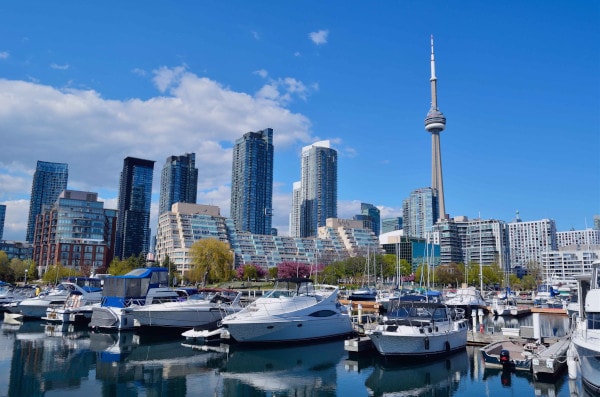
The commission rates for Toronto real estate agents are similar to the rates all across Ontario, typically 3.5% to 5% of the selling price. However, the real estate market in Toronto is highly competitive which could provide you with some incentives as a customer. Due to the high competition and the higher property prices, many Toronto real estate agents are providing incentives to their clients for both buyers and sellers.
For sellers, you may be able to negotiate a 1% commission rate bringing the combined real estate commission down to 3.5% (2.5% for the buyer agent and 1% for your seller agent).
For buyers, you can now find cashback agents. What is a cashback real estate agent? For example, if you purchase a $800,000 home your agent will earn 2.5% as commission, which is equal to $20,000. If the agent offers 30% cashback on their $20,000 commission, they will then give you $6,000 as a rebate after closing.
What is a one percent real estate agent?
Sometimes seller (listing) agents offer a discount to their client by reducing their commission fee. A one percent real estate agent is someone who charges only 1% commission to sell your home. The seller agent will get 1% (+HST), as promised, and the buyer agent will typically receive their standard 2.5% (+HST) commission rate, equalling a combined real estate commission rate of 3.5% (+HST).
What are the different types of commissions?
Depending on your real estate agent, the commission can be paid as one of two different forms:
- A percentage of the selling price
- A fixed or flat fee, also called a flat-fee substitute
Who pays the real estate commission?
The seller of the home will usually pay the real estate agent commission. When a home is listed, the seller will decide on the gross commission they are willing to pay and how it will be split between the buyer and seller agents. This commission will then be paid out by lawyers after the transaction has been completed.
Typically, the seller will cover the commission for both agents. In rare cases, if the buyer has signed a representation agreement with their agent and the seller lists the property by themselves or chooses not to give a buyer agent commission, the buyer may have to pay their agent. However, such cases are rare and real estate agents will generally let you know beforehand if it is the case.
Do I have to pay taxes on the real estate agent commission?
Yes. Real estate commissions in Ontario are subject to 13% HST, which is added to the commission amount and paid by the seller.
Why are real estate commissions so high?
Real estate agent commissions are high because the commission is split between many different parties and the real estate agent has to cover any marketing expenses even if the home doesn't sell. The agent may have to pay upfront for professional photography, mail marketing materials, supplies, and much more. Your agent works very hard behind the scenes to ensure that you are getting the best price for your property and in some cases, a higher commission can mean better marketing for your home. Although, like any service, you can negotiate. Many real estate agents are willing to lower their commission or even offer a cashback rebate.
Comparison of Real Estate Commission Across Provinces
| Province | Typical Commission Rate | Avg. Home Price (September 2026) | Buyer Agent Commission | Seller Agent Commission |
|---|---|---|---|---|
| Alberta | 7% for 1st $100K and 3% for the remaining balance | $528,556 | $9,928 | $9,928 |
| Ontario | 5% of total price | $791,691 | $19,792 | $19,792 |
| B.C. (Greater Vancouver) | 7% for 1st $100K and 2.5% for the remaining balance | $924,279 | $12,707 | $14,900 |
| Saskatchewan | 6% for 1st $100K, 4% for the 2nd $100K, and 2% for the remaining balance | $350,191 | $6,502 | $6,502 |
| Manitoba | 5% of the total price | $415,308 | $10,383 | $10,383 |
| Quebec | 5% of the total price | $556,162 | $13,904 | $13,904 |
| Nova Scotia | $1,500 flat fee for properties under $25,000 and 5% of the total price for other properties | $463,312 | $11,583 | $11,583 |
| New Brunswick | 5% of the total price | $346,510 | $8,663 | $8,663 |
| Prince Edward Island | 5% of the total price | $409,925 | $10,248 | $10,248 |
| Newfoundland and Labrador | 5% of the total price | $372,633 | $9,316 | $9,316 |
Ontario and British Columbia have some of the highest housing prices in Canada, resulting in higher total real estate commissions. Although British Columbia's commission rates are among the lowest in the country, homeowners often pay higher commission amounts because of the province's high home prices.
Who sets the commission rate?
There is no formal rule or regulation that sets the commission rate. Each agent can choose their own commission type and rate or fee. Although the commission will vary from agent to agent, it will be close to the average commission for the area. Real estate commissions are negotiable. Details about your agent's commission will be outlined in the contract you sign when hiring an agent.
Can I save with a flat-fee commission?
Flat-fee commissions can seem like a great way to save money, especially since they are usually cheaper than equivalent percentage-based commissions. However, the quality and quantity of services offered with flat-fee packages are often much lower. You may have to stage and market the home yourself.
Are there cases where the seller does not have to pay a real estate commission?
Yes. Real estate agent commission is paid only when the property is sold, even if the property has been listed for a long time. In addition, some sellers may choose to self-list their properties and not offer a commission to buyer agents. This will help ensure that your property is being shown to potential buyers by their agents. As well, we only recommend listing a property yourself if you have experience in real estate (i.e. you have a done few real estate transactions yourself).
Ideally, instead of listing a home yourself to avoid commission fees, we would recommend hiring an experienced agent and negotiating. Offer to do most of the work like marketing, staging, etc. and the agent may be willing to lower the commission to 1%.
What is the commission on a pre-construction home?
The typical pre-construction commission rate is about 3% to 4% in the GTA but in some cases the rate could be lower than 3% or higher 4%. Many agents are offering cashback incentives on their earned commissions when selling pre-constructions. See above for information on cashback agents.
What does it mean to double-end a real estate commission?
A double-ended deal is when one real estate agent represents both the seller and the buyer. In this case, the agent will get the full amount of the commission. This can happen if the buyer directly contacts and works with the seller's agent after finding the listing without consulting an agent of their own. However, this is not recommended due to potential conflicts of interest. The conflict being that the buyer and seller have different interests within the real estate transaction. For example, the seller of the home will want to sell a home for the maximum possible value. On the other side, the people buying a home will want to get the cheapest price possible. How can one agent protect both these conflicting interest? Agents are required to tell you in advance if they are double-ending a commission. In many parts of North America, this practice of dual agency real estate is illegal.
What are some restrictions on commission types in Ontario?
The Real Estate Council of Ontario (RECO) does not allow a commission type to vary based on the final selling price of a home. For example, you are not allowed to be charged a rate for a base amount and then a higher rate for the remainder. It is possible and common in some other provinces to charge a rate for a base amount and then a lower rate for the remainder.
It is also not permitted to have a commission based on the difference between the listing price and the final sale price.
Agents are allowed to base their commissions on how much they think the home will sell for. For example, a $400K home will have less commission than a $1M home if charged at the same rate. Agents can choose to charge a lower commission rate for the $1M home or a higher commission rate for a $400K home.
Other real estate fees
There are many additional closing costs involved in selling a home including lawyer fees, penalties from closing out a mortgage too early, as well as legal fees.
For Sale by Owner (FSBO)
For Sale by Owner (FSBO) means selling your home without hiring a real estate agent to manage the sale. You take responsibility for setting the asking price, preparing and marketing the property, arranging showings, and negotiating offers.
Selling privately can reduce your commission costs, but it requires time and an understanding of real estate transactions. You will still need to budget for legal fees, marketing expenses, listing services, and any compensation you agree to pay the buyer's brokerage.
If the buyer has an agent, that agent represents the buyer's interests. As a self-represented seller, seek independent advice on pricing and contract terms rather than relying on the buyer's agent.
How do I sell FSBO in Ontario?
To prepare for a private sale and reach potential buyers:
- Set a realistic asking price. Research comparable properties and recent sales in your neighbourhood. Consider a professional appraisal if you need help establishing your home's value.
- Prepare and advertise your property. Use clear photographs, accurate property details, and a well-written description. FSBO websites, social media, and a lawn sign can help attract buyers.
- Consider a flat-fee MLS® listing. A brokerage can list your property on an MLS® system and REALTOR.ca while you handle showings and negotiations.
- Decide whether to offer buyer-agent compensation. There is no mandatory 2.5% commission. Document any payment you agree to make. Ontario agents must inform their buyers about properties that meet their criteria regardless of the commission offered. If your contribution falls short of the buyer's agreed brokerage fee, the buyer may need to cover the difference under their representation agreement.
- Involve a real estate lawyer early. Have your lawyer review the agreement of purchase and sale before you sign, explain your obligations, and handle the legal closing.
Flat Fee MLS® Listing
A flat-fee MLS® listing allows you to pay a fixed listing fee instead of a percentage-based listing commission. Often called a “mere posting,” this service gives your property MLS® and REALTOR.ca exposure while you manage much of the sale yourself. The brokerage's responsibilities depend on the agreement and package you choose.
MLS® systems are operated by local real estate boards and associations, which share listing information with REALTOR.ca for public viewing. CREA owns the MLS® trademarks; MLS® systems and REALTOR.ca are separate services.
Examples of Ontario listing services include:
| Provider | Advertised pricing | What the service includes |
|---|---|---|
| ForSaleByOwner.ca | $499 for DIY Fast-Track or $598 for Fully Guided | MLS® and REALTOR.ca listing through Easy List Realty, advertised as remaining active until sold. With DIY, you complete most of the listing setup; with Fully Guided, the team builds it from your information. You manage the sale afterward. Its $149 FSBO-only package excludes MLS® and REALTOR.ca. |
| RocketListings.ca | $69.99 per month or $99.99 for two months, plus HST | MLS® and REALTOR.ca listing through Robin Hood Realty Limited, Brokerage, with up to 40 photos, listing updates, and forwarded inquiries. You handle showings and negotiations. |
| ListedBySeller.ca | $98.99 for two months, plus tax | REALTOR.ca exposure, up to 40 photos, and automated lead forwarding. Brokerage services are provided through ICI Source Real Asset Services Inc. |
| List It Realty | $549 plus HST for the Essential package | A 12-month MLS® and REALTOR.ca listing with up to 50 seller-supplied photos. Additional services are available at extra cost. |
Advertised prices checked October 8, 2026. Prices and package features may change.
Before purchasing a package, confirm which MLS® system your home will appear on, the listing duration, applicable taxes, and any charges for renewals or additional services. Buyer-agent compensation you agree to pay is separate from these listing fees.
Full-Service Alternative: One Percent Realty
If you prefer an agent to handle pricing, marketing, showings, and negotiations, One Percent Realty Ontario offers full-service representation at the following advertised rates:
| Home's sale price | Total commission before HST | Included buyer-agent compensation |
|---|---|---|
| Below $400,000 | $7,950 | $3,500 |
| $400,000 to $900,000 | $9,950 | $4,500 |
| Above $900,000 | 1% of the sale price + $950 | 0.5% of the sale price |
The commission is payable when the sale closes. Offering more compensation to the buyer's agent increases the total cost. Compare the services and total fees with both flat-fee listing packages and other agents' quotes before deciding how to sell your home.
Housing Markets Across Canada














Ontario Real Estate Agent FAQ
What are the different titles of real estate agents?
The most common titles for real estate agents are Sales Representative, Broker, and Broker of Record.
- Sales representatives are anyone who has obtained a real estate licence from their respective regional governing body. They usually have to pass a set of courses and exams. In Ontario, the Real Estate Council of Ontario (RECO) oversees and administers real estate licenses.
- Brokers are real estate specialists with additional qualifications that have passed a broker's license exam. In Ontario, brokers are required to have at least two years of experience as a sales representative.
- Brokers of record, also known as managing brokers, are brokers that manage and supervise a brokerage. They are responsible for making sure that the brokerage complies with all relevant regulations. While there can be many brokers working in the same brokerage, there can only be one broker of record.
Are there any differences in the skills of a sales representative compared to a broker?
Not necessarily. Many experienced real estate agents who specialize in buying and selling homes and dealing with clients do not apply to become brokers. While brokers usually have a minimum level of experience and take additional courses and exams to obtain a broker's license, the broker's license is only required for those who want to own or manage a real estate brokerage.
How many real estate agents are there in Ontario?
Ontario has the largest real estate services sector in Canada. RECO regulates more than 110,000 real estate agents and brokerages under the Trust in Real Estate Services Act, 2002 (TRESA). Of those agents, over 70,000 are part of the Toronto Regional Real Estate Board (TRREB). In Canada, there are over 160,000 real estate agents and brokers represented by CREA.
Ontario Real Estate Brokerage FAQ
What are the largest real estate brokerages in Ontario?
The largest real estate brokerages and franchises in Ontario are:
- RE/MAX or Real Estate Maximums is an international real estate franchise headquartered in the US. RE/MAX franchises their brand to over 140,000 agents in more than 110 countries and territories. RE/MAX first arrived in Canada in 1977 and is now the largest real estate franchise in Canada. In Ontario, some of the largest brokerages operating under the RE/MAX brand include RE/MAX Hallmark Realty Ltd., RE/MAX Realtron Realty Inc., RE/MAX Real Estate Centre Inc, RE/MAX West Realty Inc. and RE/MAX Realty Specialists Inc.
- Royal LePage is a Canadian real estate franchise with over 600 locations and almost 18,000 agents. In Ontario, some of the largest brokerages operating under the Royal LePage brand include Royal LePage Signature Realty, Royal LePage Real Estate Services Ltd. and Royal LePage Your Community Realty.
- HomeLife is a trademark of HomeLife Realty Services Limited, a Canadian real estate franchise with brokerages throughout Canada. In Ontario, some of the largest brokerages operating under the HomeLife brand include HomeLife/Miracle Realty Ltd, HomeLife Landmark Realty Inc. and HomeLife New World Realty Inc.
- Century 21 is a global real estate franchise based in the US with over 122,000 real estate agents in 81 countries and territories worldwide. Century 21 opened its first Canadian office in B.C. in 1976 and now has over 400 offices throughout Canada. In Ontario, some of the largest brokerages operating under the Century 21 brand include Century 21 Leading Edge Realty Inc. and Century 21 People's Choice Realty Inc.
- Keller Williams is a global real estate franchise with approximately 170,000–175,000 agents worldwide. It is among the largest real estate franchises in the world, as well as the leader in the US by sales volume. Some of the largest brokerages in Ontario under the Keller Williams brand are Keller Williams Energy Real Estate and Keller Williams Realty Centres.
- Right at Home Realty Inc. is Canada's largest independent brokerage with 12 offices and over 5,000 members. Based in Toronto, it operates primarily in Ontario and is considered to be the largest brokerage in the province by both the number of agents and sales volume.
- Sutton is a Canadian real estate franchise with over 7,500 real estate agents and 200 offices across Canada. Some of the largest brokerages in Ontario under the Sutton brand are Sutton Group-Admiral Realty Inc and Sutton Group-Heritage Realty Inc.
- Ipro Realty is a Canadian real estate brokerage based in Brampton, Ontario with over 1,000 real estate agents.
- PurpleBricks is a UK-based real estate company with brokerages in the UK, Canada, and Germany. They offer a fixed fee selling commission for their real estate services.
- Coldwell Banker is an American real estate franchise, now a subsidiary of Compass, Inc. (NYSE: COMP), with over 3,000 offices in 49 countries and territories. They were founded in 1906 and came to Canada in 1989.
What is a brokerage franchise?
Franchised real estate brokerages are brokerages that license and work under real estate brands like Century 21, Royal LePage, and RE/MAX. Many of the largest brokerages in Canada are franchised brokerages. Even though they may share the same brand name, franchised brokerages operate independently and may compete with other brokerages with the same brand.
Are there any differences between real estate agents from a brokerage like Century 21 and a smaller less-known brokerage?
The brokerage alone will not tell you how much value a particular agent can bring you. Brokerages can provide a brand name, but ultimately it's your real estate agent that will do the work to help you buy or sell a property. You can find poorly-rated agents in brokerages of some of the largest real estate franchises and you can find highly experienced agents in less well-known brokerages.
Are real estate commissions the same between real estate brokerages?
Most brokerages in Ontario charge the standard commission of 2.5% for seller agents and 2.5% for buyer agents. However, many agents advertise lower commission packages for sellers and some give cashback rebates for buyers as an incentive to work with them. Some brokerages also offer similar lower commission packages for sellers. For example, One Percent Realty charges only 1% of the sale price plus a $950 fixed fee for sellers. You are more likely to find these agents in the GTA, where property prices are high enough so that a lower commission can still be in the tens of thousands, than other regions in Ontario.
Some brokerages also offer alternative commission types. PurpleBricks is a UK-based real estate company that charges a fixed fee of $2,999 in Ontario for listing homes. Due to their low cost, these brokerages may not offer the same services as a full-commission agent.
Real Estate License Ontario
To obtain a real estate license in Ontario, the Real Estate Council of Ontario (RECO) requires individuals to complete the Ontario Real Estate Salesperson Program. This program is currently being offered by Humber College and includes 3 steps to becoming a licensed real estate salesperson in Ontario. The cost for the Real Estate Salesperson Program at Humber College is approximately $5,025 + taxes and the registration with RECO for a new salesperson real estate license in Ontario costs $590 + taxes.
How to Get a Real Estate License in Ontario
There are 3 steps in the Real Estate Salesperson Program that will allow you to obtain a real estate license in Ontario:
- Pre-Registration Phase
- Registration with RECO
- Post-Registration Phase
Step 1: Pre-Registration Phase
The pre-registration phase of the Real Estate Salesperson Program includes 5 courses, 2 simulations, and 4 exams. The courses are self-directed and you have 24 months to complete the pre-registration phase. The maximum allotted duration is 21 months for the 5 courses, which gives you a maximum of 3 months to complete the exams and simulations.
Courses include:
- Real Estate Essentials
- Residential Real Estate Transactions
- Additional Residential Real Estate Transactions
- Commercial Real Estate
- Getting Started
Step 2: Registration with RECO
After you complete the pre-registration phase, you will be able to register for a real estate salesperson license with RECO. This must be done within 1 year of completing the pre-registration phase.
Step 3: Post-Registration Phase
Within 2 years of registering your license with RECO, you will need to complete the post-registration phase to renew your real estate license. The post-registration phase requires you to complete a mandatory compliance course and two (2) out of five elective courses.
The elective courses available for you to choose from include:
- Working in Real Estate: Rural, Recreational, Waterfront Properties
- Working in Real Estate: Ownership Alternatives and Complexities
- Real Estate as an Investment Strategy: Residential Properties
- Real Estate as an Investment Strategy: Commercial Properties (Fundamentals)
- Real Estate as an Investment Strategy: Commercial Properties (Advanced)
What Are Real Estate Commissions?

Real estate commissions are the fees you pay to your real estate agent for their services. It is usually calculated as a percentage of the selling price of the property. In Ontario, the most common real estate agent commission is 5% of the property price plus HST, but in practice, the commission ranges from 3.5% to 5%. This gross commission will be divided between the buyer and seller agents, where the buyer's portion (typically 2.5%) is mentioned on the MLS listing.
Disclaimer:
- Any analysis or commentary reflects the opinions of WOWA.ca analysts and should not be considered financial advice. Please consult a licensed professional before making any decisions.
- The calculators and content on this page are for general information only. WOWA® does not guarantee the accuracy and is not responsible for any consequences of using the calculator.
- Financial institutions and brokerages may compensate us for connecting customers to them through payments for advertisements, clicks, and leads.
- Interest rates are sourced from financial institutions' websites or provided to us directly. Real estate data is sourced from the Canadian Real Estate Association (CREA) and regional boards' websites and documents.