

Home Appraisals 2026


What You Should Know
- Home appraisals are conducted to find the value of a home
- Knowing the value of a home is important when you're looking to buy or sell it
- Mortgage lenders will only lend money based on the appraised value of the home
- For sellers, an appraisal can give a starting point for your listing price
- For buyers, having an appraised value lower than your purchase price will mean that the lender won’t be letting you borrow as much as you will need
- Buyers will need to make up the difference in cash, or the buyer can walk away if there was an appraisal contingency clause in the purchase agreement contract
- Home appraisals usually cost $300 to $600 and are paid by the buyer or borrower
- Home appraisals are also needed when refinancing your mortgage
What Is a Home Appraisal?
An appraisal is a process of determining the value of the home by a professional who is unbiased and impartial in their judgment. Appraisals are used in home purchase transactions & mortgage refinancing as they are useful for all parties involved in a real estate transaction from the home buyer & seller to the lender. In home purchases, an appraisal is helpful to ensure the home selling price is an accurate representation of the home’s condition, surrounding location, and neighbourhood. Whereas, in a refinance, an appraisal is essential for the lender to determine the amount of funds that can be borrowed.
In each case, the appraisal helps the lender ensure that the homeowner is not borrowing more than what the home is worth. The home acts as the collateral in the transaction, such that if the borrower were ever to default, the lender can seize and foreclose on the home or conduct a power of sale on the home. If the value of the home is less than the amount borrowed, then the lender is taking on a large amount of risk and can lose money on the transaction.
How does the appraisal process work?
An appraisal can cost anywhere between $300 - $600 and is usually part of the closing costs of the transaction. There are several factors that can impact the value of your home:

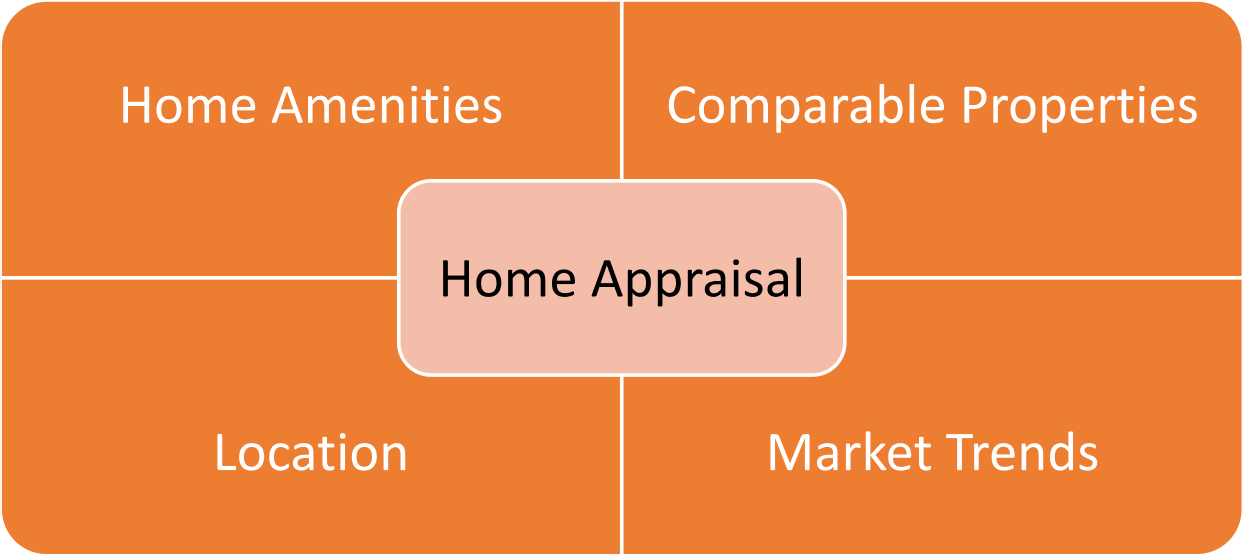
- Home Amenities – Number of bedrooms, bathrooms, square footage, quality of fixtures, utilities, and appliances are all analysed. Apart from interiors, the exterior such as structure, construction type, parking, and gutters are also included in the appraisal.
- Comparable Properties – Similar valued properties in the area are used for comparison to determine the value of the properties in the area.
- Location – The neighbourhood, local amenities, public transit, schools, and safety standards can all play a role.
- Market Trends – The economic and social trends in the market can also affect the value of your home. For example, if it’s a buyer’s market where there are excess sellers and fewer buyers which can dampen prices, or a seller’s market, where there are excess buyers and fewer homes which can push up prices.
When does the appraisal take place in the home sale process?
The appraisal takes place right after the buyer and seller have agreed on a price and an agreement has been signed. After all the details regarding the agreement have been finalized, the lender will send an appraiser to determine the value of the home.
However, the seller can also choose to get an appraisal done before the buyers approach them in a pre-listing appraisal. In this case, the appraisal is done before all the negotiations and it removes any unpredictability of a lower appraisal after an agreement has been signed. The pre-listing appraisal home price can stay the same all the way till closing as that is the fair market value of the home. A pre-listing appraisal should be used when:
- Your home is unique or different from other homes making it very hard to find comparable homes in the surrounding area
- The real estate market is facing a lot of volatility making it very difficult to gauge buyer and seller sentiment resulting in unpredictable prices.
Types of Home Appraisals
Appraisals for Home Buyers
If you are using a mortgage during the home buying process, an appraisal is an essential requirement for your lender and will be one of the first steps in the closing process. Lenders require this to ensure the home’s value covers the loan amount. However, if your down payment is less than 20%, the insurer usually values the home with an automated model instead, so many buyers never pay for a full appraisal. If you are buying entirely with cash, an appraisal is optional.
When an appraisal occurs, there are generally two outcomes:
- The appraised value is equal to or greater than the contract price: The transaction proceeds smoothly, as the lender is satisfied that the home provides sufficient collateral for the mortgage.
- The appraised value is less than the contract price: This can create a hurdle. Because the bank will only lend up to the appraised value of the home, there will be a shortfall between what the bank will provide and the agreed-upon purchase price.
If the appraisal comes in lower than the purchase price, you can use it as a bargaining chip to negotiate a lower price with the seller. A lower appraisal can be a useful tool for buyers; however, the seller is under no obligation to agree to a price reduction and may choose to get a second opinion or wait for another buyer. If the seller refuses to lower the price, you will need to cover the difference in cash to proceed, or you can walk away from the deal if your purchase agreement included a financing condition or appraisal contingency.
How Insured Mortgage Appraisals Work
- Automated approval is standard: Default insurers evaluate property values using automated risk algorithms like CMHC’s emili system. For most routine home purchases, a physical appraisal is not required because the automated system approves the valuation instantly.
- Insurers usually cover the cost: If the automated system flags a property for additional review and requests a physical appraisal, the mortgage insurer orders and manages it directly, covering the appraisal fee. This differs from conventional mortgages, where the buyer pays the $600 fee out of pocket.
- Stricter dual-layer underwriting: If an appraisal is triggered, it goes through a secondary review by both the lender and the mortgage insurer. Because insurers carry up to 95% Loan-to-Value risk, they enforce stricter standards regarding recent comparable sales, unpermitted additions, and major property defects.
- Independent appraiser selection: Borrowers and real estate agents are strictly barred from choosing or hiring the appraiser. The lender or insurer must order the assessment independently.
Appraisal for Home Sellers
A home appraisal can be useful to determine the list price for sellers. However, if the appraisal is done afterward and the appraised value is less than the list price, sellers might need to reduce the price or get another appraisal. Sellers can also choose to wait for an all-cash deal where an appraisal is not required, but that is difficult and can prolong the selling process. If the location your house is located in has experienced distressed sales resulting in a greater number of homes for sale, it is likely to drive your home price down too.
In order to increase the appraised value of your home you can do some renovation. Note that renovations which relate to taste and their value is subjective are likely to increase your home price by less than their cost. While renovations which are improvements by objective measures are likely to increase the appraised value by more than their cost. You can use the greener homes initiative to subsidize your improvements while increasing the appraised value of your home.
Appraisals for Mortgage Refinancing
When refinancing your mortgage, an appraisal is critical because lenders use your home as collateral and restrict the maximum loan amount to a percentage of the home’s appraised value (typically up to 80% in Canada).
If your appraisal comes in lower than expected, it directly reduces the amount you are allowed to borrow. This creates two potential issues:
- Shortfall on your existing loan: If the maximum allowed loan falls below your current outstanding mortgage balance, the lender will decline the refinance unless you pay down the difference with cash.
- Reduced cash-out limit: If you are refinancing to tap into your home equity, a lower property valuation reduces the cash you can withdraw.
A physical home visit is not always mandatory. For low Loan-to-Value (LTV) refinances or properties in high-density urban areas, lenders frequently use Automated Valuation Models (AVMs) instead.
Note: A home appraisal is also mandatory when applying for a reverse mortgage in Canada, as the lender must establish your home’s fair market value to calculate how much equity you can access.
Tips to Get A Higher Appraised Value
There are several ways in which you can get a higher and accurate appraisal for your home:

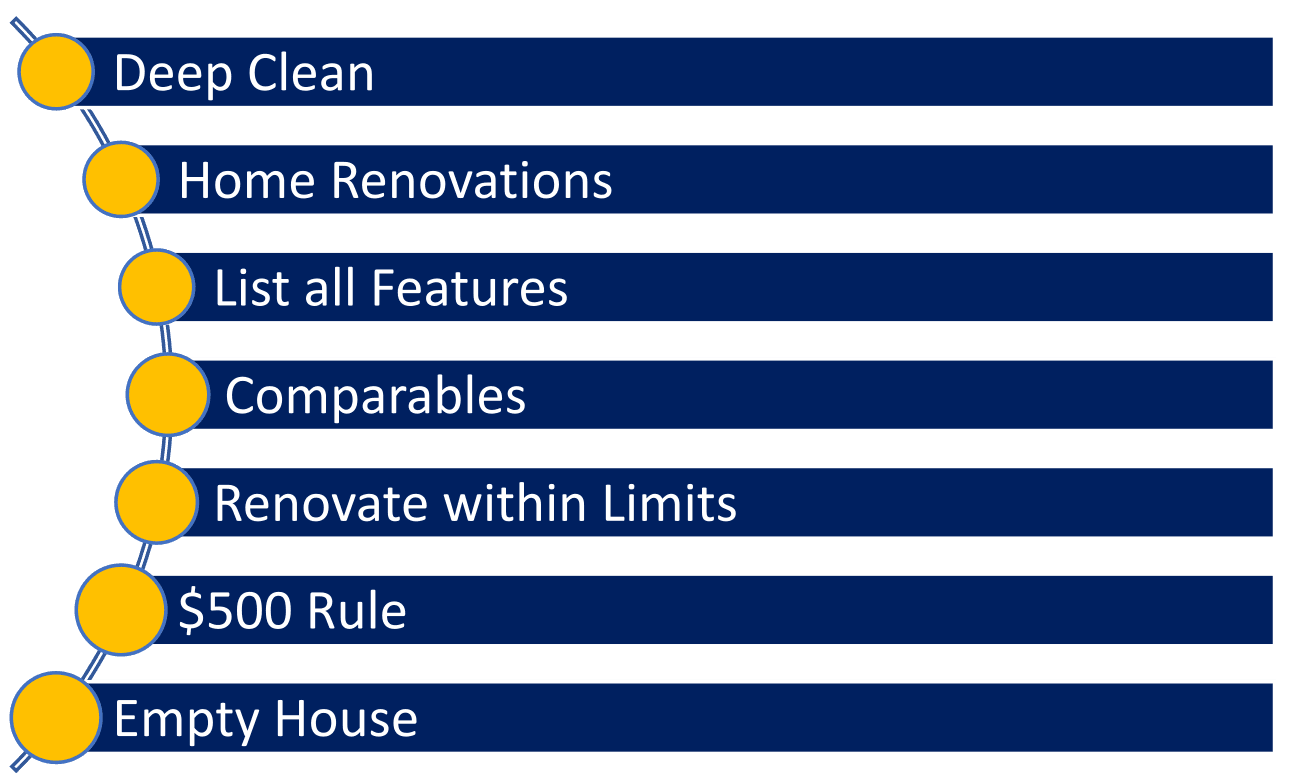
- Deep Clean: Although this sounds rudimentary, it needs to be mentioned. If you have carpets get them deep cleaned, marble floors should be polished, and the garage should be clean. The exterior of the home such as the front yard, porch, and back yard should all be cut and mowed. Apart from basic cleaning, if you have an additional project like a new pool getting built, you should cover it to make it look presentable.
- Home Renovations: If you have had major renovations in the past such as a new kitchen or finishing the basement, you should point those out to the appraiser. All relevant information such as when the upgrades were done, by who, and how much they cost should be provided.
- List all Features: Although the appraiser will take note of all the features in the home, you can make a list of all the amenities and surrounding benefits of your home.
- Comparables: Comparables or comps are values of surrounding homes that are used to value your home. The appraiser will get their own comparables, however, as comps are vast and can be for any homes in the surrounding area, you can track MLS listings in your neighbourhood and provide them to the appraiser.
- Renovate within Limits: If you are planning to sell the home then renovating an entire kitchen or washroom might not be worth the money or effort. However, small changes such as getting the carpets cleaned/changed, improving the lighting, or painting the walls can have a positive effect on your appraisal and do not require a lot of funds.
- $500 Rule: Appraisers often value homes in increments of $500, such that if they see a leaky faucet or cracked door, your home value could reduce by $500 even though it might only cost you $300 to fix. Therefore, any small changes or fixes that you can make should definitely be made as they can make a huge difference to the final value.
- Empty House: When the appraiser comes to value the home, make sure you don’t have a full family gathering or a get together of any sort, as this can make it very hard for the appraiser to do his or her job. If you can, you should take pets out during the appraisal process too.
Appraisal Problems and Q&A
Why would the appraised value be less than the contract price?
An appraised value coming in lower than the contract price usually stems from a disconnect between what a buyer is willing to pay and what historical market data supports.
Key Reasons for a Low Appraisal
- Bidding Wars and Rapid Market Shifts: In competitive seller’s markets, buyers frequently bid well above the asking price to win a property. Because appraisers must base their valuation on past sales data (“comps”) from previous months, the official appraisal may lag behind rapid, real-time price spikes.
- Overpricing by the Seller: Sellers sometimes list their homes above fair market value due to emotional attachment or unrealistic expectations. If a buyer agrees to an inflated price that lacks supporting comparable sales in the immediate area, the appraisal will fail to reach the contract price.
- Property Deficiencies and Unpermitted Work: While appraisers assess overall property condition rather than conducting a detailed home inspection, visible flaws significantly impact value. Deferred maintenance, structural issues, or unpermitted additions (such as an illegal basement suite) require a “cost to cure” adjustment, lowering the final valuation.
- Appraiser Inexperience or Poor Comps: Accurate valuations require deep local expertise. An appraiser who is unfamiliar with a specific neighbourhood, micro-market trends, or unique home features may select poor comparable properties, resulting in an unfairly low estimate.
- A Cooling Market: If property values in an area are actively declining, contract prices negotiated on past market expectations may exceed what current sales data supports.
Disclaimer:
- Any analysis or commentary reflects the opinions of WOWA.ca analysts and should not be considered financial advice. Please consult a licensed professional before making any decisions.
- The calculators and content on this page are for general information only. WOWA® does not guarantee the accuracy and is not responsible for any consequences of using the calculator.
- Financial institutions and brokerages may compensate us for connecting customers to them through payments for advertisements, clicks, and leads.
- Interest rates are sourced from financial institutions' websites or provided to us directly. Real estate data is sourced from the Canadian Real Estate Association (CREA) and regional boards' websites and documents.